Touch me with powder — Gabi Campo and Mia Pak bring agency and compassion to Martyna Majok’s World Premiere stage adaptation of Girl, Interrupted
By Julia Wojciechowska
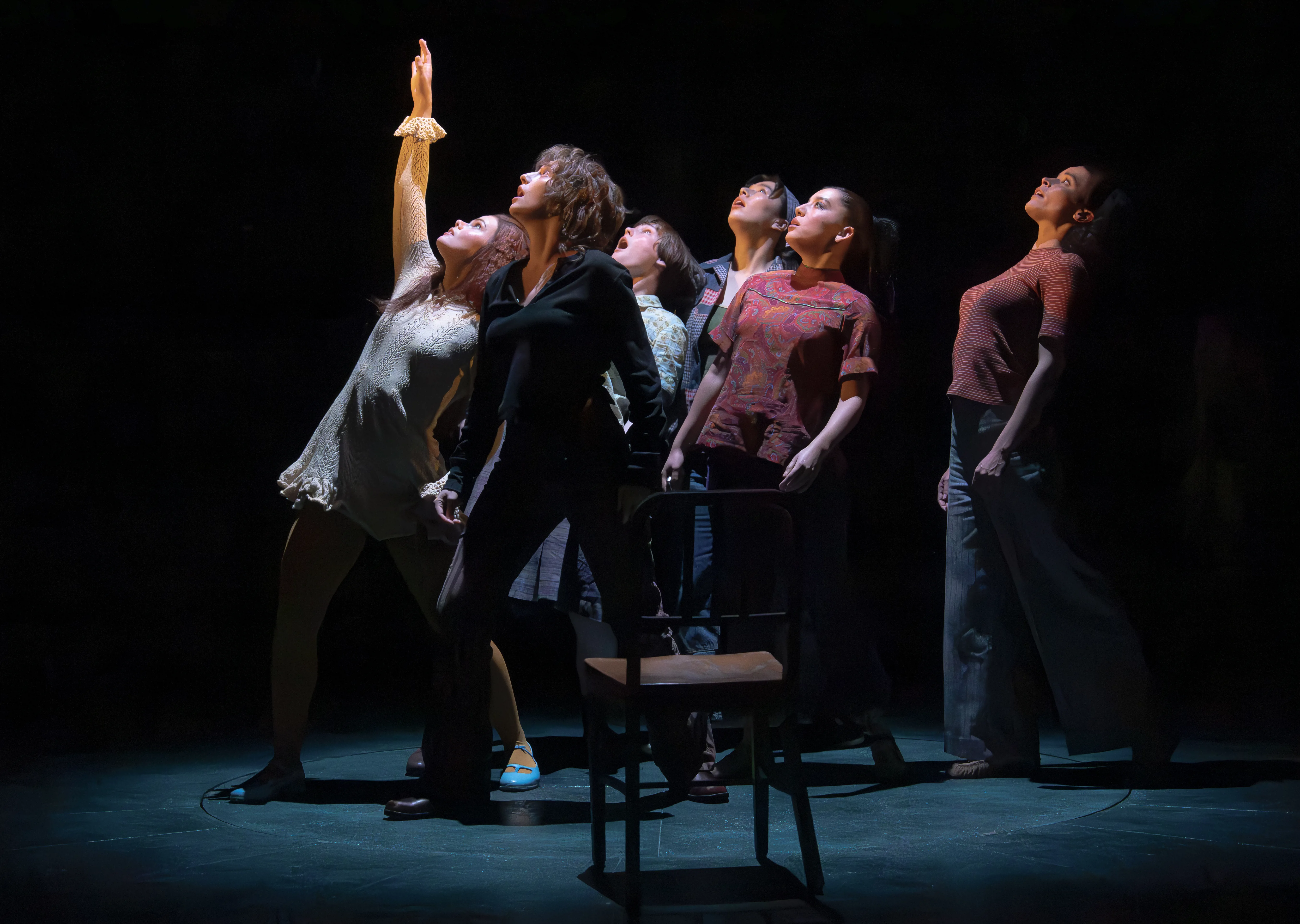
GIRL, INTERRUPTED made its stage debut almost three decades after the award-winning memoir by Susanna Kaysen was adapted to a movie. The captivating story about young women and their stay at the psychiatric hospital has won Angelina Jolie an Academy Award for Best Supporting Actress, and placed the production amongst the iconic positions in film history. At The Public, the story is now being retold. Rawer, stronger and punchier than ever, Martyna Majok’s musical debut in collaboration with Aimee Mann unravels layers of sensitivity and intimacy that the camera lens and book pages have been obscuring so far.
Susanna Kaysen, the protagonist and author of the 1993 memoir, is only 18 when she signs herself into McLean Hospital following her suicide attempt. What follows is her nearly two-year stay at the institution, orchestrated by adults convinced they know what’s best for her and her fellow patients.
Spoiler alert: They don’t.
The hospital walls begin to contain not only the cruel, outdated treatment procedures but also the subtle and intimate unfoldings of girlhood shared by Susanna’s companions: Grace, Lisa, Tori, Polly, and Daisy. In conversation with Mia Pak (Grace) and Gabi Campo (Tori), I had to ask how much of their own experiences as young adults they brought into their roles. According to Pak, recognizing that age and life experience do not always operate in sync has been crucial in her character’s portrayal:
Whenever I play someone younger than me, I find it unhelpful to just think about their age because I feel like you're doing a disservice to the teenager. These girls have lived a lifetime in a very short amount of time. So it feels like they've had to harden, cut off a part of their own childhood, in order to survive.
Both Pak and Campo grew up in sunny California and remember their teens with fondness. When asked whether these memories of adolescence informed their performances, unexpectedly, Campo draws on the struggles of adulthood instead:
The feelings of loneliness or rejection, or the things that I've experienced as I've gotten older, is something that I'm bringing into the character. It makes me feel for Tori, because she felt these so early on in her life. It connects us in a way.
The lines between childhood and adulthood in the piece are blurry. The intentional vagueness that Kaysen has been praised for is seamlessly carried into the scenes by Martyna Majok, keeping the play sensitive to nuance. For Pak, the transition from child to adult is a process that feels ongoing, although she does feel like the moment she left the nest truly marked a new chapter in her life. In Campo’s case, the question comes down to the realization that life has its consequences:
Maybe it's because I'm Mexican, but we are so inherently connected with death. I feel the moment of realization for me was when I became aware of my own mortality but also the mortality of your family, people in your life. These girls dealt with that very early.
The suffering of McLean’s patients does not overshadow the moments of joy and mischief that bring the audiences to laughter. Under the attentive direction of Jo Bonney, the play emphasizes the subtle community-building where secrets and quirks are shared in confidence.
I asked how The Public held the space for its performers as an institution and if these dynamics carried into the rehearsal space. The question immediately sparks Pak’s recollections of her time at summer camp as a kid: “It feels like we all can be kids again around each other,” she says. “These are girls who feel safe with each other in a world that does not make them feel safe”.
These moments make us forget that, at times, pain can hide in plain sight. Both Majok and Bonney seem to recognize the complexity of mental illness and steer away from stigmatization by introducing characters far more complex than their diagnosis. As a matter of fact, we never find out much about Grace’s condition from the play. How did Pak fill these blanks, and did she feel they were intentional?
It used to be said that Grace suffered from schizophrenia. Now, it's not in the show anymore, but that gave me a diagnosis. I do like that it's not said. I have a friend who has had schizophrenic breaks. I've talked to them about their experience and what I found out was that they were masking it well. There was a lot of internal paranoia and fear, but people didn't really notice. And that was really helpful with [my playing] Grace.
In Tori’s case, while we know she struggles with substance abuse, Campo recognizes in her heroine something far more profound.
I didn't want to label her or say that she's a drug addict. She’s someone who wants to be held and seen and wants to connect with people, but she's so deeply afraid of vulnerability. Her journey throughout the show is feeling the shame that she's coped in this destructive way.
I was surprised to find out that an intimacy coordinator (Ann James) was present in the process, establishing the intimate and vulnerable connections on stage, although they do not extend into sexual encounters. What I initially understood as supervision, Campo quickly reframes as permission:
This is the language for how we communicate with each other, physically and intimately. How can we discuss and communicate fully about what our boundaries are, so that we're able to do this eight times a week, sustainably? It's more about permission that not everybody has the language to express, but an intimacy coordinator does.
Thanks to the language James introduces in the rehearsal process, the sense of agency amongst the performers, and consequently, their characters, is being restored. And we feel it onstage. McLean patients, comically and tragically, spend their stay on their own terms. They question, demand, and put up a fight if needed. They care for each other.
The little they can control, they control with precision. And the precision starts with knowing the boundaries. So when I ask about the communication in the rehearsal room and work with an intimacy coordinator, neither Pak nor Campo shies away from sharing the knowledge:
MP: Demonstration! [to GC] Is there any part of your body I shouldn't touch right now? No? Okay, great. You're green?
GC: Yes, I’m green.
MP: So powder touch is soft, like, powder [touches Gabi’s shoulder with fingertips]. Then you can touch harder. This is more like you're smearing paint onto something. And then, clay—you're moving the flesh [the touch intensifies and grabs onto Gabi’s arm]. So those are the three levels. Someone can say touch me, my left shoulder with powder. Or my forearm with clay.
GC: And it's not inherently sexual. A lot of intimacy coordinators deal with very sexual situations. But they can say: The nature of this kiss, or this sex scene, is very clay. So it's muscular, and you're moving—there's that language.
GIRL, INTERRUPTED offers a captivating portrayal of mental illness that is both controlled and reflective. It’s evident that those qualities were carried into the process at every stage of the production, from a casting of insightful individuals through thoughtfully executed rehearsals.
The ironically uninterrupted 110 minutes aim to lock in both audiences and performers—who never leave the stage—inside a fever dream of discomfort mixed with undeniable beauty. What lingers is a performance of agency and intimacy in the world that systematically expects its patients to perform their diagnosis. Thanks to performers like Campo and Pak, we learn to look into Kaysen’s story with an eye that seeks compassion instead of judgment and finds nuance beyond these labels.
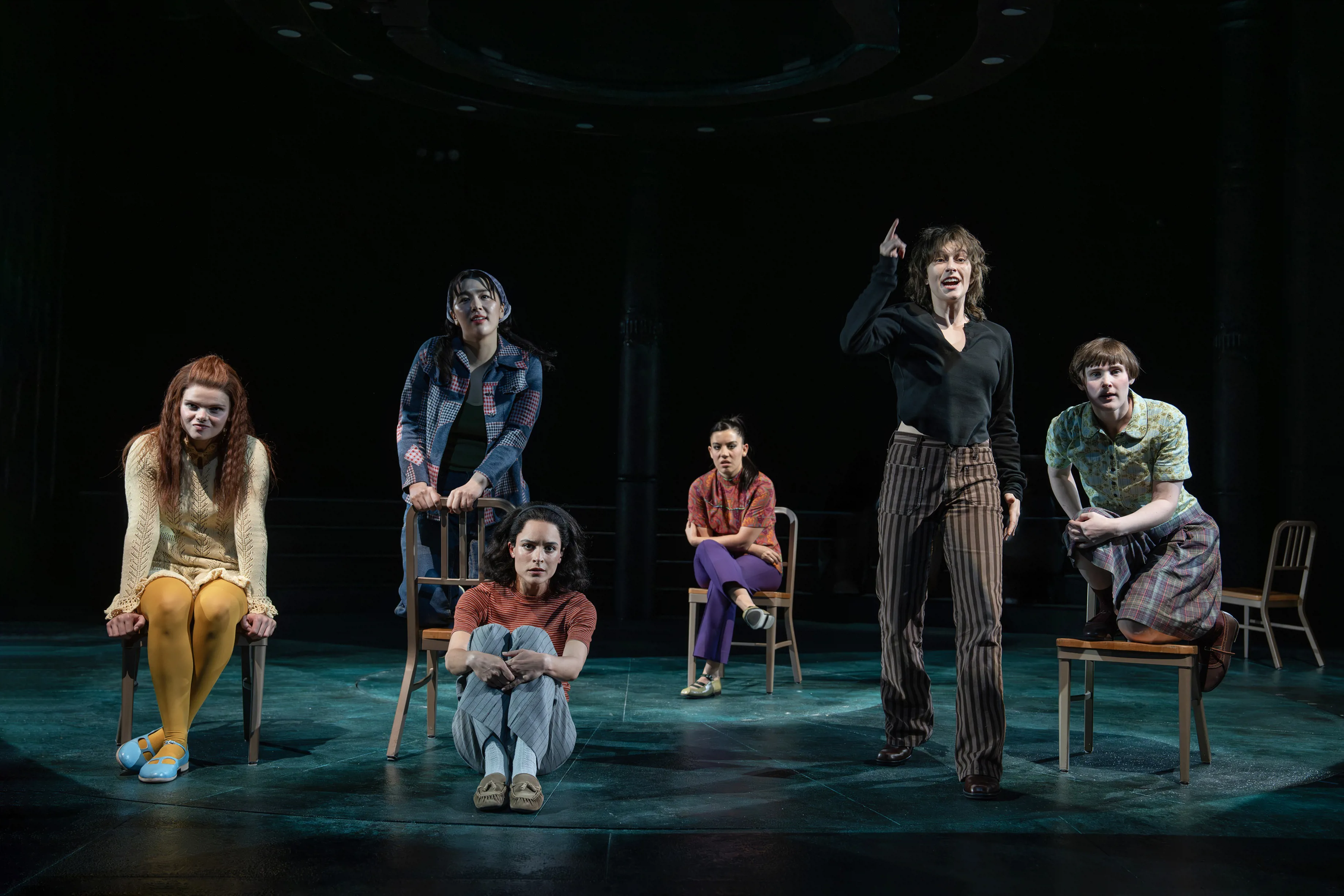

GIRL, INTERRUPTED runs through Sunday, July 12. Click here for more information on the show and how to get tickets.
BIO
Julia Wojciechowska is a Polish-born and raised theatre practitioner with a background in set and costume production. She holds an MA in Performance Studies from NYU Tisch School of the Arts and has recently been accepted as a doctoral candidate for the Theatre and Performance program at CUNY.
This piece was developed with the BIPOC Critics Lab, a program founded by Jose Solís training the next generation of BIPOC journalists. Follow on X: @BIPOCCriticsLab.