Writing Political Hope: The Playwrights of Public Charge
By Amanda L. Andrei
The language of diplomats has a certain cadence: the slipperiness and ambiguity of a tough negotiation, the deferential tone of speaking to global leaders, the punctuated urgency and acerbic jokes when confiding to a mentor. In the world premiere of PUBLIC CHARGE, the language of diplomats extends further to include the tenderness among family members, the desperation of a hostage situation, and the innermost fears and dreams of a public servant.
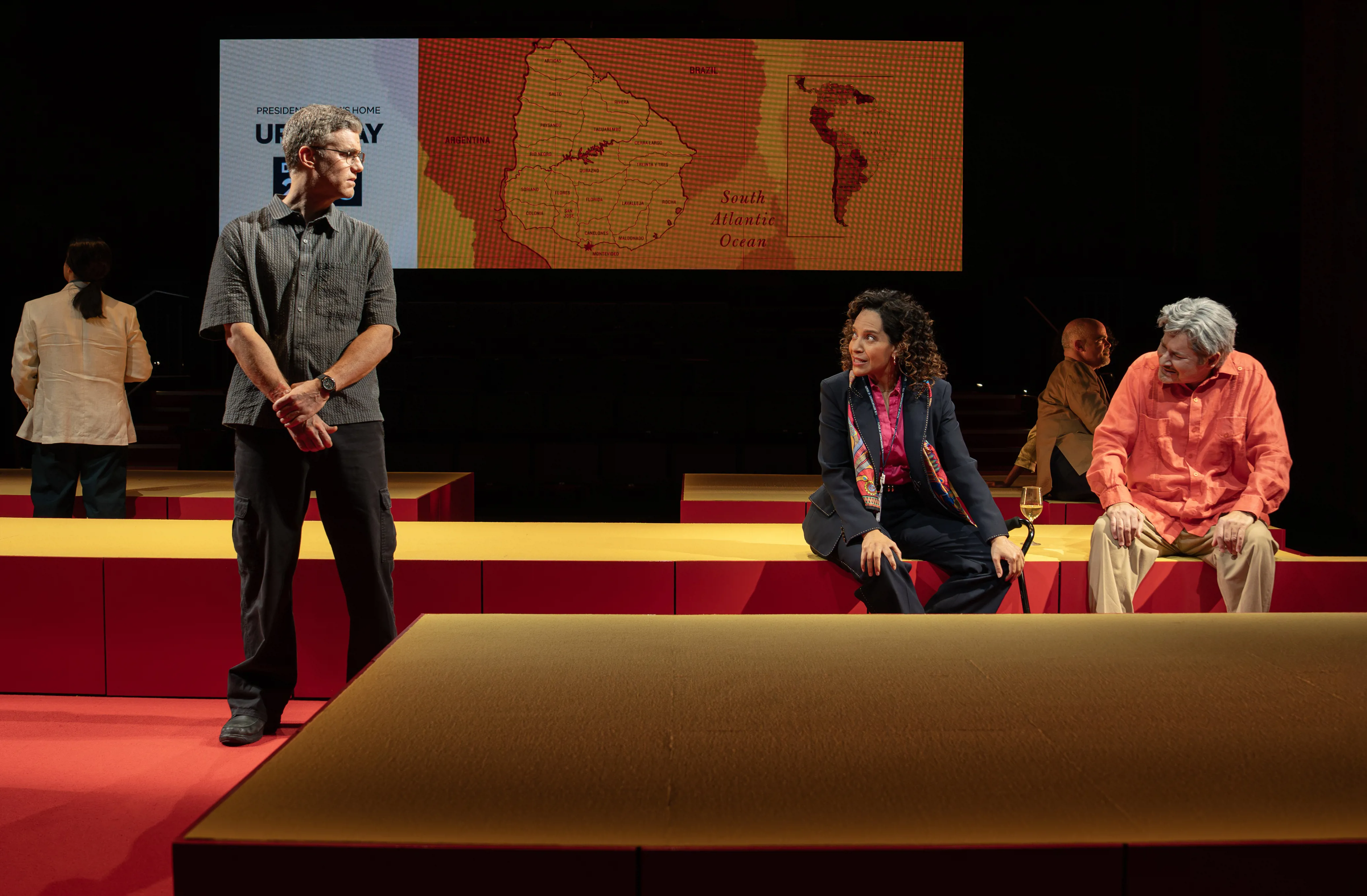
Co-written by former United States ambassador Julissa Reynoso and playwright Michael J. Chepiga and based on true events from Reynoso’s life, this new political drama spans over 30 years and crosses among the Latin American countries of the Dominican Republic, Haiti, Uruguay, and Cuba and the U.S. cities of New York City and Washington D.C. Starting with Reynoso’s time as a child immigrating from the Dominican Republic to the U.S. in 1982, the play jumps to Washington D.C. in 2009, when the young lawyer left her law firm to work for Secretary of State Hillary Clinton, and finally concludes with a historic transformation in political relations between Latin America and United States in 2014, in no small part to Reynoso’s perseverance and heart.
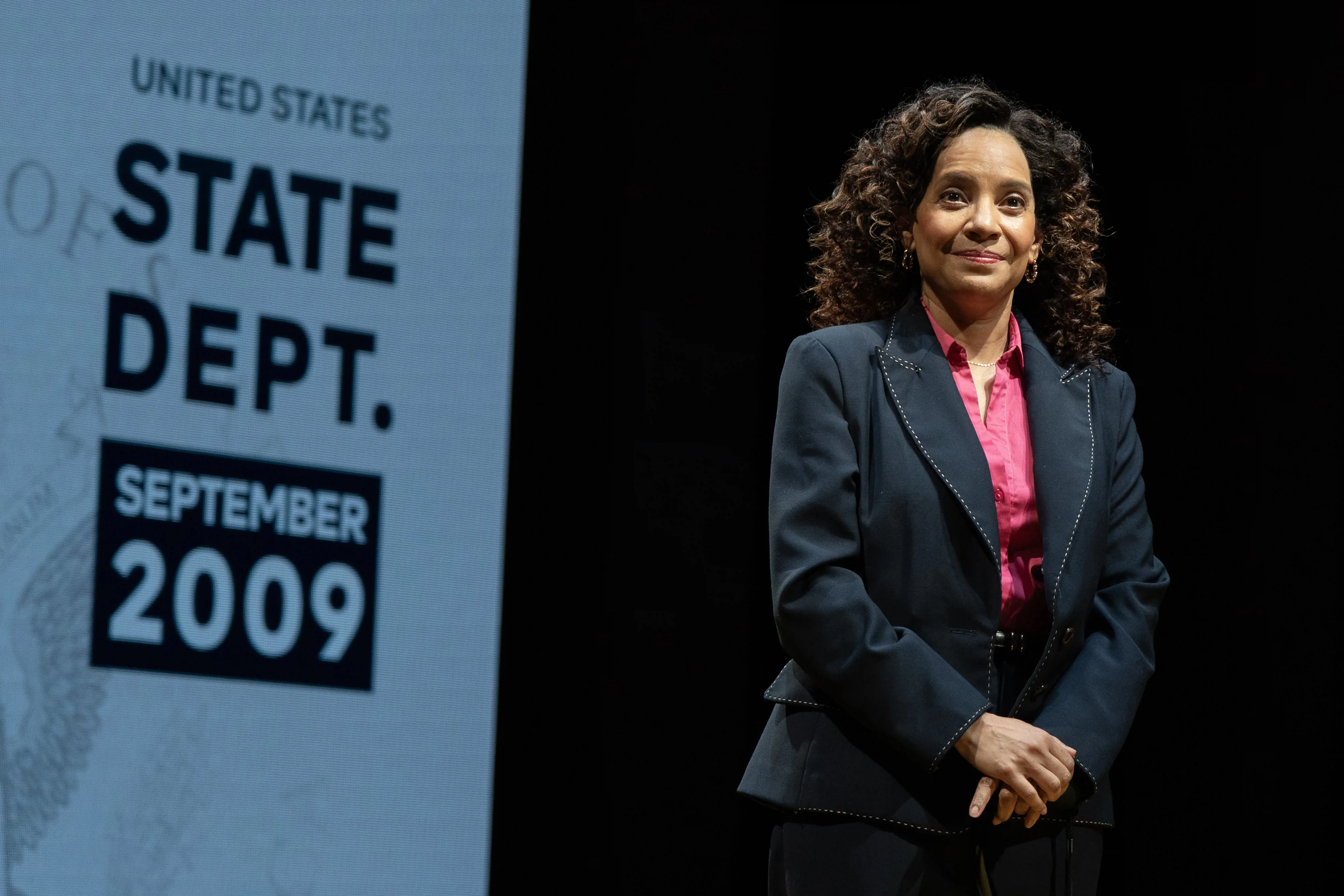
Directed by Doug Hughes and featuring Zabryna Guevara as Julissa Reynoso, the play harkens to an era that seems so long ago. “This is the United States of America, baby,” the character Julissa tells a fellow diplomat at one point. “We’re THE model for the world.” Call the sentiment naïve, braggadocious, or cynical, but it still contains seeds of hope for this experiment of a nation: Integrity yields liberty. Freedom is possible.
Performing it live is all the more powerful, reanimating the historical events and giving them breath. In separate email interviews, Reynoso and Chepiga discussed adapting this story for the stage, their co-writing process, and what’s giving them hope these days.
This interview has been edited for length and clarity.
How was the co-writing process for this play?
JR: Writing with Michael was a pleasure. We went back and forth with ideas and drafts. I learned so much from him. He is a master of the language. I am very grateful to Michael for accompanying me in this process and journey.
MJC: The co-writing process worked well and was smooth. We never sat down together to write. We were often an ocean or two apart. We would talk on the phone, sometimes at length, to discuss a new scene: what it would be about, who would be in it, where it was set, what we wanted it to accomplish. Then one of us would take the lead on turning out the first draft. We would then pass that draft back and forth by email, until we both signed off on it. Usually each of us was simultaneously working on the first draft of a new scene, as well as on revisions to existing scenes. I think this was easier, more effective, and more efficient than sitting down together in a room with several blank pieces of paper. Or a computer. No time wasted on idle chatter or procrastination.
How was it working with Julissa to write her as a character?
MJC: Julissa had not written a play before (that I am aware of), but she is a very fast learner, so she quickly got the hang of it and what makes a play different from other forms of writing. She was adamant that what we wrote had to be true and accurate. I understood that and appreciated that it had to be difficult writing about yourself. During the time we were exchanging drafts we had very few disagreements, and the ones we had were pretty quickly and smoothly resolved. No pouting, screaming, hanging up, threats, or anger—we just worked things through.
How did it feel writing yourself as a character?
JR: It's a bit of an out-of-body experience.
What was something surprising about the process of adapting this story for the stage?
MJC: I was surprised at the scope of the story and the characters, and her memory of details. More recently I am amazed at how much more relevant the play becomes every day, with headlines about immigration, Cuba, regime change, national politics, American foreign policy, and so on.
JR: The process requires continuous learning and editing. One day an idea sounds great; another day it doesn’t. As a writer, I have learned not get too attached to the work.
What are some other scenes or moments you considered putting into the play, but didn't make it?
MJC: We did more than consider; we had many scenes in the play that we ultimately took out for different reasons, but mostly to keep the play moving swiftly and smoothly. We had a scene about the Senate’s hearing on Julissa’s nomination to be ambassador to Uruguay. We had a scene of the hearing itself, of a conversation between Julissa and a senator’s aide, and of Julissa’s mother passing homemade Dominican cookies around the hearing room. We also had a scene in which the embassy official who approved her visa application contacts her after her ambassadorial appointment. We discussed but did not draft a scene with her and the embassy official who refused to let her in the first time she applied. We had but cut a scene of her taking her farewell from Uruguay when she said goodbye to President Mujica and returned to the U. S. Someone suggested we write about her arrival and early education in the Bronx, but we thought that was a different play. Maybe a prequel or a sequel.
JR: We had several scenes that were ultimately cut, including a different introduction where I was speaking at a university and another scene incorporating my Senate confirmation hearing. I don't miss those scenes, but at the time they seemed like brilliant ideas.
What’s something right now that’s giving you hope?
MJC: What gives me hope about the play is the story, the politics, the actors (who are incredible), our director who is doing amazing things, the set, and the people at The Public who are dedicated, hardworking, talented, and creative. What gives me hope in life? That would have to be my grandkids.
JR: Citizens calling for justice and questioning assumptions—always give me hope.
PUBLIC CHARGE runs through Sunday, April 12. Click here for more information on the show and how to get tickets.
BIO
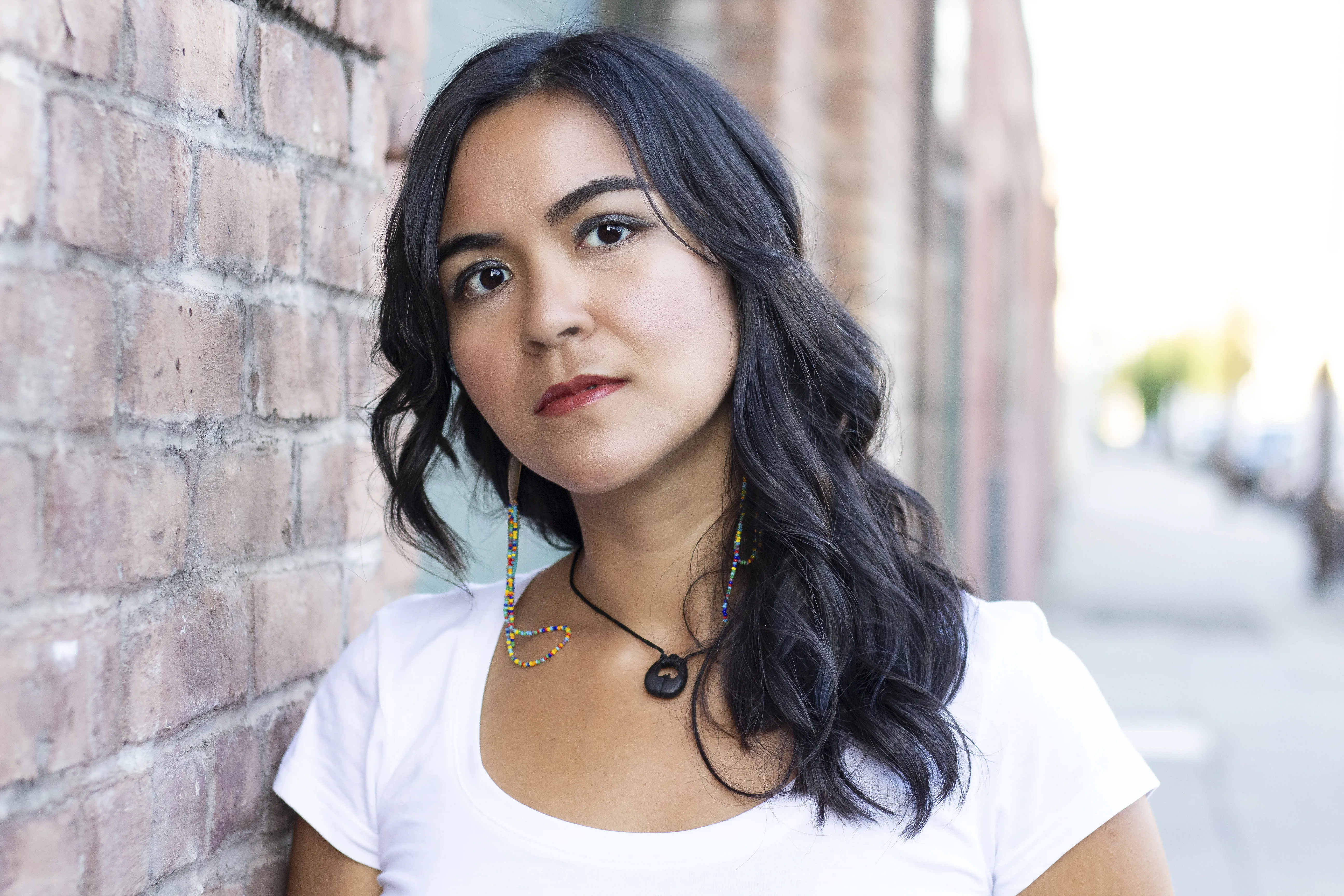
Amanda L. Andrei is a playwright, literary translator, and theater critic/journalist residing in L.A. by way of Virginia/Washington D.C. She writes epic, irreverent plays that center diasporic Filipina women, and she co-translates from Romanian with her father. Her play Mama, I wish I were silver won the 2022 Jane Chambers Award for Feminist Playwriting. She is a former contributing editor to American Theatre Magazine; alum of Asian Cultural Council, National Critics Institute, and BIPOC Critics Lab; and a Theatre Communications Group Rising Leader of Color. Her articles appear in the L.A. Times, American Theatre Magazine, Stage Raw, Rappler, and more.
This piece was developed with the BIPOC Critics Lab, a program founded by Jose Solís training the next generation of BIPOC journalists. Follow on X: @BIPOCCriticsLab.